
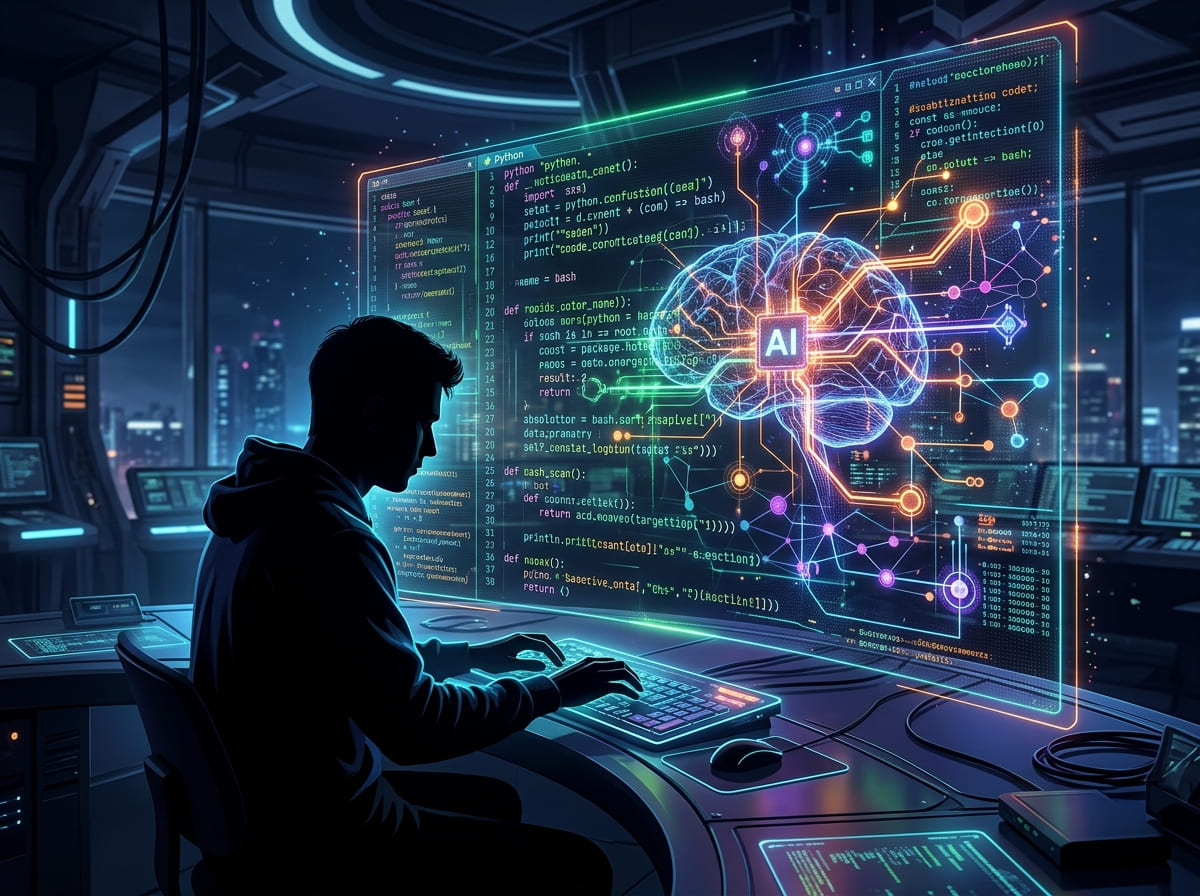
Artificial intelligence: not the end of the road, but a new turning point.

Does that dark code screen look like an outdated piece of technology to you? Do you hear whispers that machines will soon take over your profession? Artificial intelligence is creeping into every corner, promising radical changes. But is it truly the next enemy of programmers, or a new partner in the journey of creativity? Let's delve into this reality and uncover what the future holds for us, the builders of the digital world.

Artificial intelligence: not the end of the road, but a new turning point.

Does that dark code screen look like an outdated piece of technology to you? Do you hear whispers that machines will soon take over your job?


Artificial intelligence is creeping into every corner, promising radical changes. But is it truly the next enemy of programmers, or a new partner in the journey of creativity? Let's delve into this reality and uncover what the future holds for us, the builders of the digital world.

Artificial Intelligence: Not the End of the Road, But a New Beginning

Imagine you're working on a massive project, and suddenly your virtual assistant—powered by artificial intelligence—offers suggestions for writing more efficient code, or even detects subtle errors you'd missed. This isn't science fiction; it's a reality unfolding before our eyes. Companies like GitHub with Copilot and Google with Bard are offering game-changing tools. They're not replacing us, but enhancing our capabilities.


Will AI replace programmers? This is a pressing question.

The simple answer is: no, not entirely. But yes, the role of the programmer will change dramatically. Think about it this way: Did the profession of writing disappear after the invention of the printing press? No, it evolved. Today's programmer's job requires more than just writing lines of code. It requires a deep understanding of problems, creativity in finding solutions, and the ability to guide these intelligent tools.

How does artificial intelligence affect programmers' jobs?

1. Automating repetitive tasks: Writing routine code, simple tests, and even fixing some common errors are all tasks that AI can perform efficiently and quickly. This frees up the programmer to focus on the more complex and creative parts of the project.

2. Accelerating the development process: AI tools help suggest solutions, generate code snippets, and improve performance, significantly reducing the time required to complete projects.

3. Improving code quality: AI can analyze error patterns and provide recommendations to improve code structure and maintainability.


4. Emerging new roles: As AI develops, new roles will emerge, such as AI Prompt Engineer, AI Model Validator, and AI Tool Developer.

The future of application development with AI: Are you ready?

The real challenge isn't facing artificial intelligence, but adapting to it. Programmers who master these new tools will have the upper hand. Have you already started exploring tools like GitHub Copilot or ChatGPT for writing code? Are you thinking about how to integrate these technologies into your workflow?

Learn to Code in the Age of AI: Strategies to Stay Ahead

Focus on core concepts: Understanding data structures, algorithms, and design patterns will remain fundamental.

Develop problem-solving skills: AI is a tool, but your human mind is what determines the right problem.

Learn how to prompt AI: How do you get the best results from these tools? This is a valuable skill in itself.


Stay informed: The world of AI is changing at breakneck speed. Keeping up with the latest developments is essential.

Are you ready to be a leader in the age of AI-powered programming?

The future doesn't belong to machines alone, but to those who know how to lead them intelligently and creatively. Share your thoughts: What are your biggest fears or hopes about the future of programming with AI? Let's start the conversation!

Comments (0)

No comments yet. Be the first to comment!

Add Your Comment

Your email will not be published. Comments require review before publishing.