
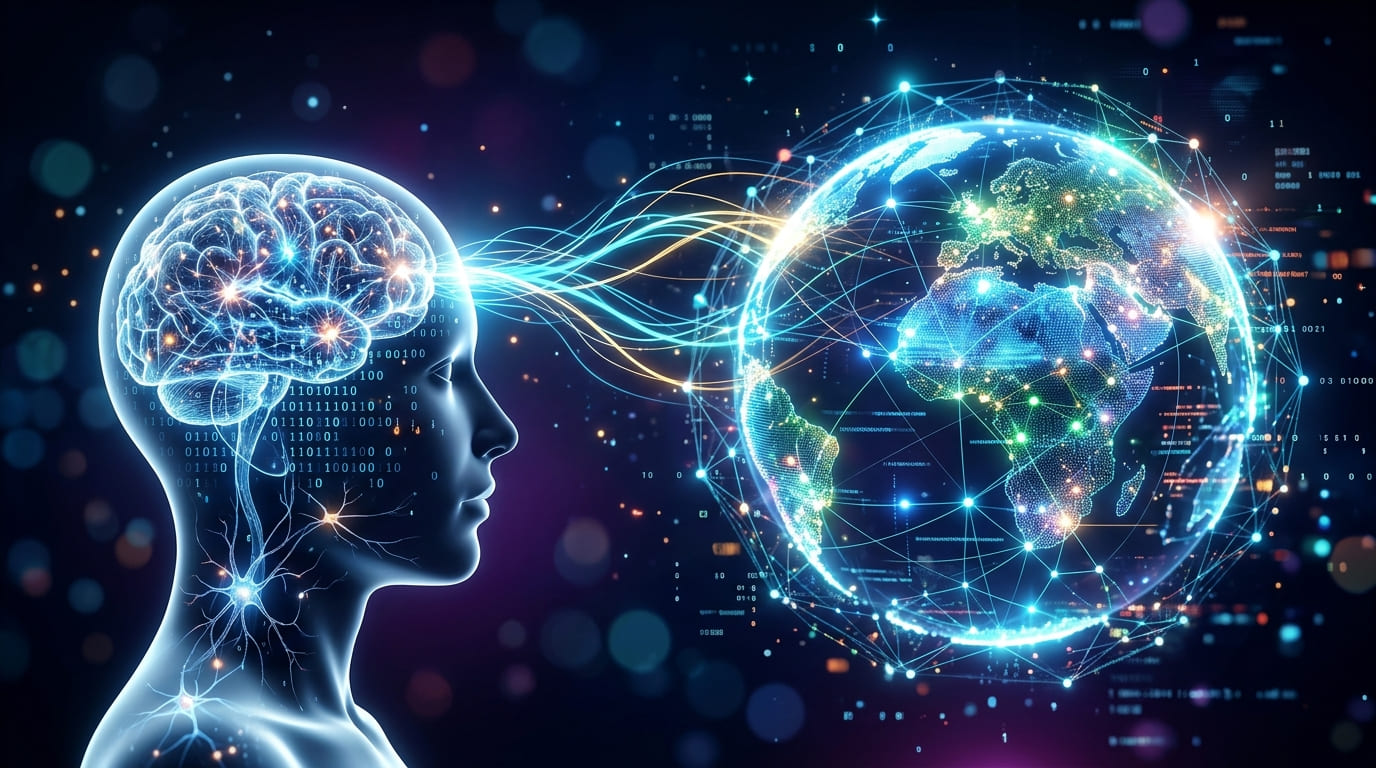
With the rapid advancement of Large Language Models (LLMs) like GPT-4 and their increasing applications in creativity, design, and marketing, the debate surrounding these tools' ability to surpass humans in complex tasks has become both a real and alarming issue. This article explores this accelerating development.
Have you ever imagined waking up to find that your digital "brain" has surpassed your human capabilities in a task you thought was exclusively yours?
This might sound like science fiction, but it's rapidly becoming a reality. Artificial intelligence isn't just a passing fad; it's a technological earthquake reshaping everything we know. Are you prepared for its consequences?
Artificial Intelligence: Not Just Software, But Emerging Minds
The concept of artificial intelligence has moved beyond simply being tools to assist us; it's becoming an entity capable of learning, creating, and even making complex decisions. Think about the last time you used a voice assistant or got a movie recommendation on a streaming platform. These are just the beginnings. But the future of artificial intelligence holds much more promise. It promises a new industrial revolution, but it also presents challenges to overcome. A Future in the Making: How Will Artificial Intelligence Change Your Life?
Imagine a world where machines operate with superhuman intelligence, anticipating your needs before you even feel them, and diagnosing illnesses with an accuracy that surpasses human experience. This isn't a far-fetched dream. In medicine, AI can analyze millions of medical records to uncover invisible patterns, opening the door to personalized treatments. In education, adaptive learning will provide each student with a unique learning path that suits their pace and abilities.
Have you thought about what your career will be like in 10 years?
Is your job at risk? Challenges you can't ignore.
But with every advancement comes a challenge. The biggest of these is the job market. With AI's increasing ability to automate tasks, there's real concern about job losses. But is this the only reality? History teaches us that technology often creates new jobs as much as it destroys old ones. The question is: Are we ready to acquire the new skills that will be required?
"We've seen how AI can write poetry, paint pictures, and compose music. Does this mean the end of human creativity?"
This leads us to other challenges:
Ethics and Bias: How can we ensure that AI systems are fair and unbiased?
Privacy and Security: With the collection of massive amounts of data, how do we protect our personal information?
Control and Accountability: Who is responsible when an AI system makes a serious mistake?
Practical Steps for an AI-Powered Future
Don't let anxiety paralyze you. Instead, invest in your future:
1. Continuously Learn: Focus on developing skills that cannot be easily automated, such as critical thinking, creativity, and emotional intelligence.
2. Embrace New Tools: Learn how to use AI tools to your advantage, becoming more productive and efficient.
3. Consider New Career Paths: Explore fields where there is a growing demand for specialized human expertise, such as Prompt Engineering, AI Ethics, and Intelligent Systems Management.
The Future Is Not Destiny, It Is Choice
AI is a tremendous transformative force. It can be humanity's greatest asset or its greatest challenge. The decision rests with us. We, not machines, shape the future. Are you ready to be part of shaping this future, or will you let it take shape without you? Share your thoughts and predictions in the comments below. We'd love to hear how you see the future of artificial intelligence and its challenges.
Comments (1)
Add Your Comment